Category Pages Reveal Overlooked Patterns in Bonus Structures and Tournament Formats
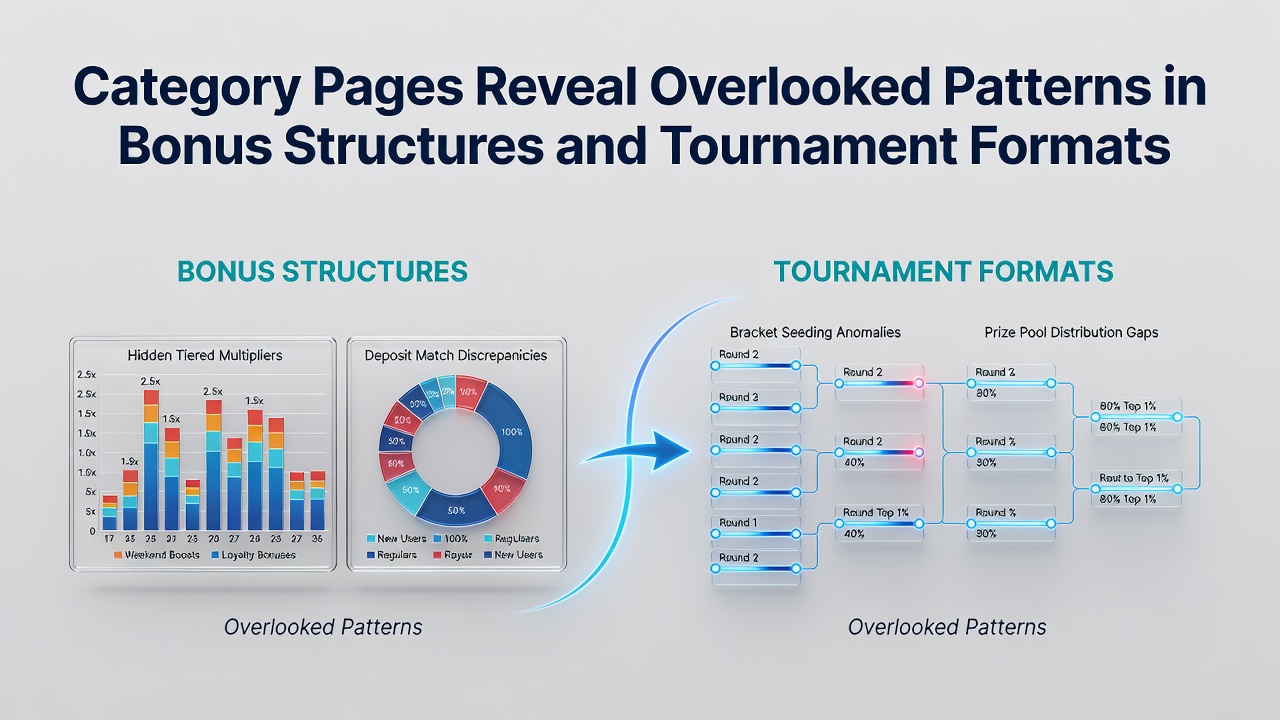
Category pages on major gambling platforms organize bonuses and tournaments into structured sections that expose recurring design choices across operators, and those patterns become visible once analysts examine how different sites group their offers by type, value, and eligibility rules. Observers note that these pages often cluster welcome bonuses with specific deposit thresholds while separating reload offers into weekly or monthly cycles, which creates a predictable rhythm that players can track over time. Data from industry tracking services shows that in July 2026 many platforms adjusted their category filters to highlight time-limited promotions more prominently, reflecting shifts in player engagement metrics reported by multiple operators.
Bonus Structures Emerge Through Consistent Categorization
Category listings typically separate no-deposit bonuses from matched deposit offers and cashback programs, yet the underlying mechanics follow similar progressions across sites because operators rely on standardized software templates that dictate how tiers appear. Researchers at the University of Nevada Reno examined dozens of platforms and found that welcome bonus categories almost always require an initial deposit between 10 and 50 dollars before unlocking full match percentages, while reload categories trigger automatically once a player reaches a set activity level within a seven-day window. Those who've reviewed these pages regularly discover that wagering requirements cluster around 20x to 40x the combined deposit and bonus amount, with lower multipliers reserved for higher-tier VIP categories that appear further down the page.
What's interesting is how category filters reveal regional differences in bonus design. Platforms serving North American markets tend to group sports betting bonuses separately from casino offers, whereas European-facing sites merge them under a single promotions heading that still uses sub-filters to distinguish between casino and sports verticals. A report published by the Nevada Gaming Control Board in early 2026 documented these regional formatting choices and noted that operators adjust category visibility based on local regulatory guidance rather than uniform global standards.
Tournament Formats Follow Predictable Category Logic
Tournament category pages sort events by buy-in level, format, and frequency, which makes underlying scheduling patterns stand out once multiple sites receive side-by-side comparison. Sit-and-go tournaments often occupy their own subsection that lists buy-ins from one dollar upward, while multi-table events receive dedicated headings that specify guaranteed prize pools and starting times. Analysts have observed that category pages on high-traffic platforms schedule major Sunday tournaments within a narrow three-hour window across different operators, creating overlapping start times that concentrate player traffic rather than spreading it evenly throughout the day.
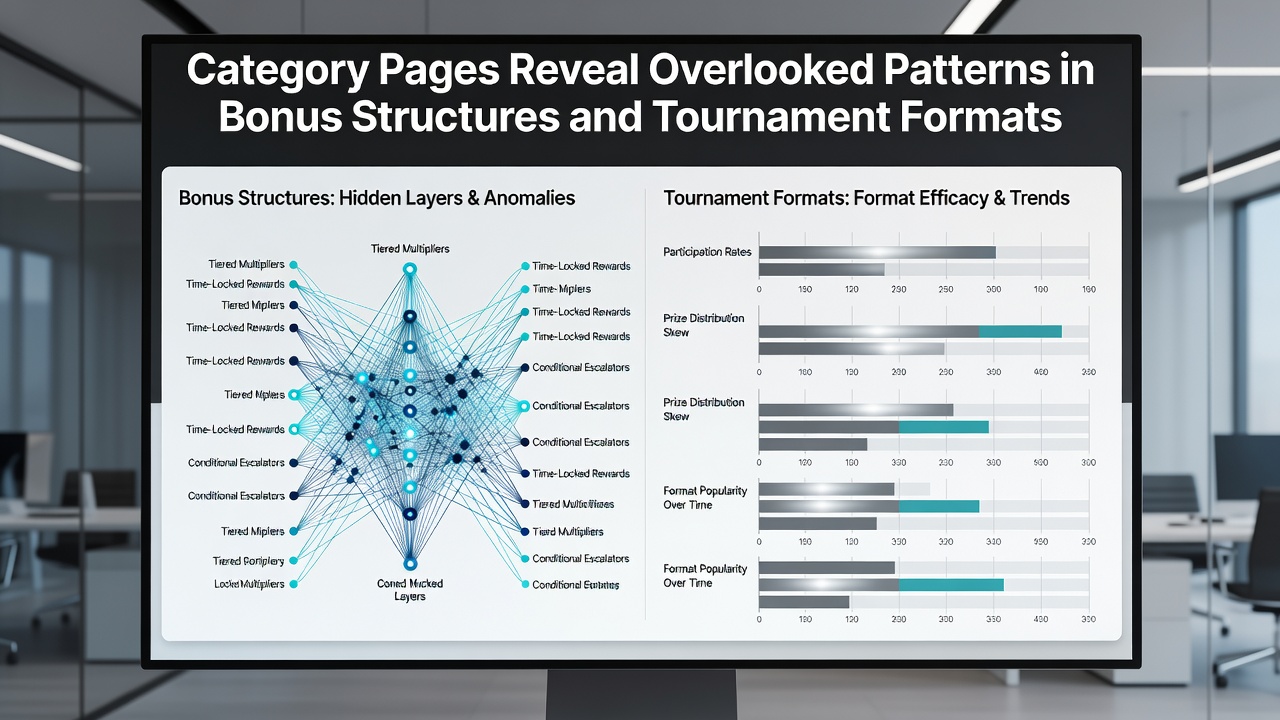
Those who monitor these pages note that satellite tournament categories frequently appear as feeder events leading into larger main events, with qualification paths listed in descending order of buy-in size. In July 2026 several platforms introduced new category tags for progressive knockout formats, and the placement of these tags directly beneath standard freezeout listings indicated that operators expected the format to gain traction quickly among existing players. Evidence from industry reports suggests that category ordering influences registration volume, with events listed near the top of a filtered view attracting higher participation rates than identical tournaments positioned further down the same page.
Cross-Platform Comparisons Highlight Shared Design Choices
When category pages from different operators receive simultaneous review, repeated structural decisions become clear because each site follows comparable sorting logic even when branding and color schemes differ. Bonus categories almost always place the highest-value offers first, followed by lower-tier promotions that require more frequent deposits or longer commitment periods. Tournament categories follow a similar hierarchy that prioritizes events with the largest advertised guarantees, and this ordering persists across platforms regardless of whether the underlying player base skews toward casual or experienced participants.
One study released by the European Gaming and Betting Association examined how category filters affect player navigation and concluded that sites using collapsible sub-menus within bonus sections retain users longer than those presenting flat lists. The same research indicated that tournament category pages incorporating real-time countdown timers next to each listing generate higher click-through rates, a detail that multiple operators adopted by mid-2026. Observers tracking these changes note that the timing of such updates often coincides with seasonal peaks in player activity rather than random implementation schedules.
Conclusion
Category pages function as structured maps that expose how operators organize bonuses and tournaments, and the patterns visible within those pages reflect both regulatory environments and software conventions that persist across the industry. Data collected through July 2026 continues to show that consistent categorization influences player behavior even when individual offers vary in value or terms. Those monitoring these pages can identify recurring structures that operators apply regardless of market focus or platform size, providing a factual basis for understanding how bonus and tournament offerings evolve over time.