Early Web Strategies for Monitoring Gambling Promotions Through Niche Blogs

Readers who followed online gambling promotions before social media platforms took hold relied on structured routines built around niche blogs and early web tools. These individuals often maintained lists of trusted sites, visited them at set intervals, and used browser features to organize incoming updates about casino bonuses and similar offers. Data from early internet usage patterns shows that consistent visitors to gambling-related blogs developed habits centered on manual checks and aggregator services rather than automated alerts common in later years.
Core Techniques Built Around Daily Blog Visits
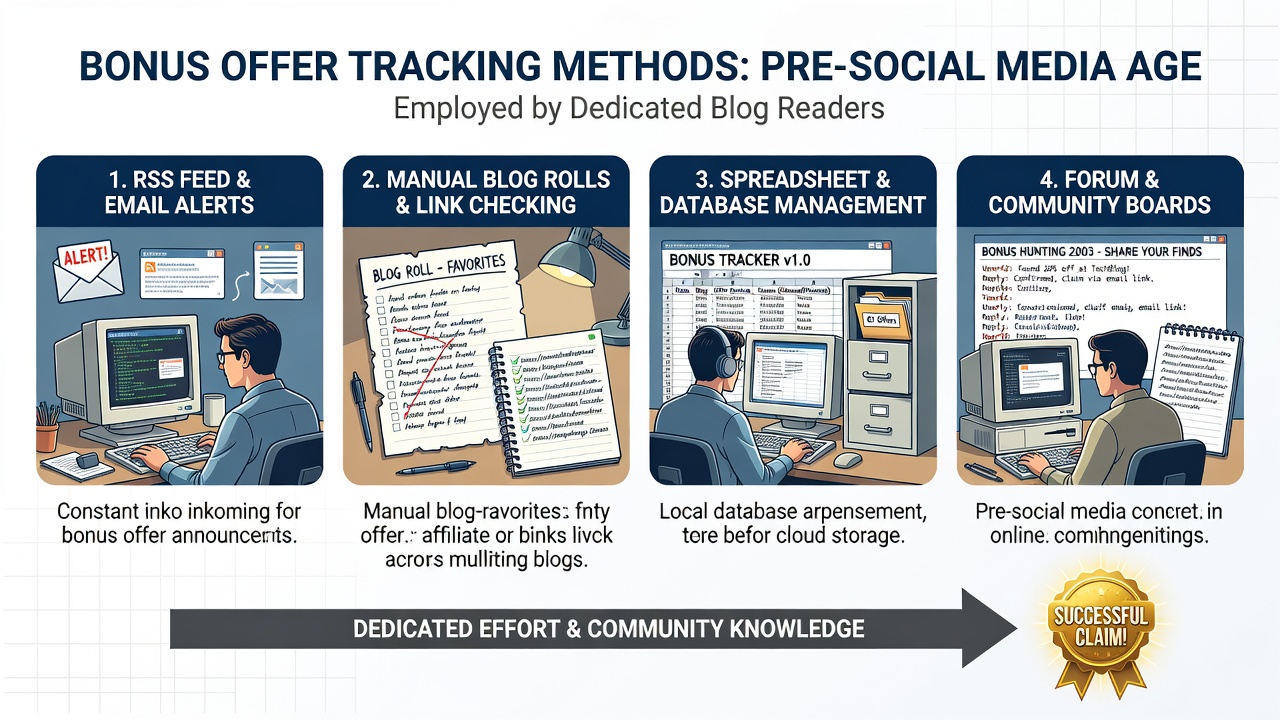
Many dedicated followers created daily schedules that included opening specific blogs known for posting fresh bonus codes and promotional details. They combined these visits with browser bookmarks organized into folders labeled by topic or region, which allowed quick navigation without searching from scratch each time. Observers note that this approach worked because blog authors posted updates on predictable schedules, often once or twice per week, giving readers reliable windows to check for new material. Those who studied these habits found that combining bookmark systems with simple text files for notes helped track which offers had already been claimed or expired.
Role of Email Subscriptions and Newsletter Digests
Blog operators frequently offered email lists that delivered summaries of recent posts directly to inboxes, and readers signed up for multiple lists to capture overlapping coverage from different sources. This method reduced the need for constant site visits while still providing timely information about limited-time bonuses. Research into early online community behavior indicates that subscribers often maintained separate email accounts for these newsletters to avoid mixing personal correspondence with promotional content. The approach proved effective in regions where internet access remained dial-up based, since downloading email required less bandwidth than loading multiple blog pages with images.
Utilizing RSS Aggregators Before Widespread Social Integration
Early RSS readers served as central hubs where users subscribed to feeds from several gambling blogs at once, creating a single dashboard that displayed new entries as they appeared. People arranged these feeds into categories such as European operators or North American sites, which helped them scan for relevant bonus announcements without visiting each blog individually. According to records maintained by the Internet Archive, many of these aggregator tools gained popularity between 2003 and 2007 precisely because they consolidated updates from scattered sources into one view. Readers who adopted this system frequently cross-referenced feed items against original blog posts to verify details like wagering requirements or expiration dates.
Community Forums and Comment Section Monitoring
Comment sections beneath blog posts functioned as informal discussion boards where readers shared findings about newly available offers or warned others about restrictive terms. Dedicated followers checked these threads regularly, sometimes creating accounts on multiple blogs to participate in conversations that revealed additional tracking tips. Data collected by Canadian Centre for Gaming Research shows that forum-style interactions around gambling promotions increased steadily through the mid-2000s, with participants often developing shorthand codes to discuss bonuses without triggering automated filters. This communal layer added verification steps that single-source blog reading could not provide.
Organizing Information with Spreadsheets and Text Logs
Some readers maintained personal spreadsheets that listed bonus codes alongside columns for casino names, expiration dates, and claimed status, turning scattered information into searchable records. Others used plain text files stored locally to note patterns across different operators, such as recurring weekend promotions or region-specific restrictions. Those who studied early adopter behavior report that these manual databases helped users avoid duplicate efforts and spot trends that individual blogs rarely highlighted. The method required discipline yet delivered clarity when multiple promotions overlapped during peak seasons.
Geographic Variations in Tracking Approaches
Readers in Australia often relied more heavily on local blog networks that covered regulatory changes from the Australian Communications and Media Authority, while European followers tracked feeds tied to directives from the Malta Gaming Authority. These regional differences shaped which bonus details received priority attention, since licensing rules varied and affected offer availability. Figures from academic studies on digital communities reveal that cross-border readers maintained separate tracking systems for each jurisdiction to stay compliant with local guidelines.
Conclusion
Methods employed by dedicated blog readers in the pre-social media period centered on disciplined routines, early aggregation tools, and community verification rather than instant notifications. These practices allowed individuals to stay informed about gambling promotions through structured visits, email summaries, and personal record-keeping systems that compensated for the absence of unified social platforms. Records from that era demonstrate consistent patterns across different geographic regions, showing how readers adapted available web technologies to maintain comprehensive oversight of available offers.